Shoulder recovery8 min read
Rotator cuff injury: what recovery really looks like
Rotator cuff pain or tear? Learn the types, what research says about exercise vs surgery, rehab timelines, safe early exercises and warning signs.
FiixBE Clinical Team
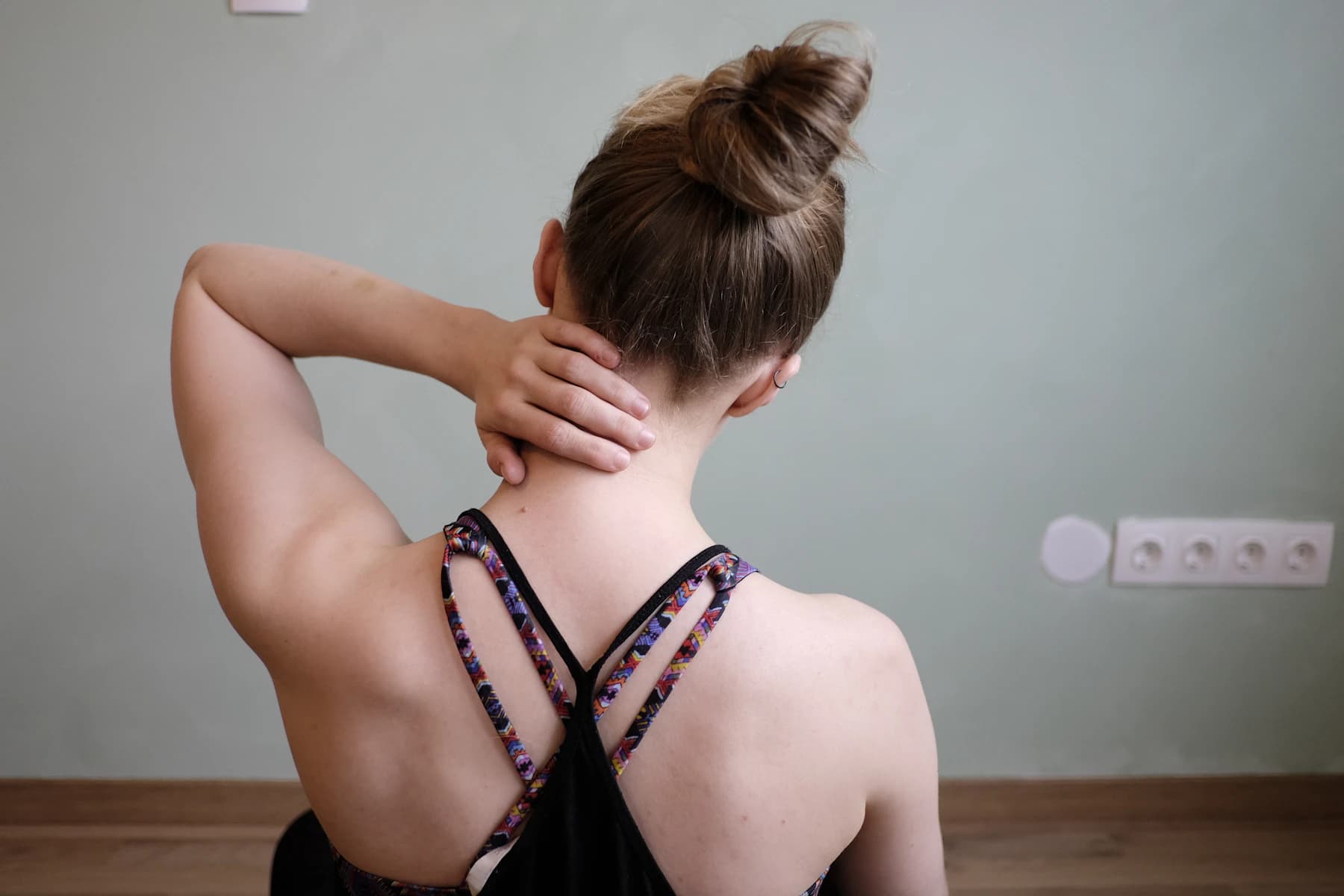
Your shoulder aches when you reach for a high shelf. It wakes you at night when you roll onto that side. Combing your hair has become a chore. These are classic signs of a rotator cuff problem.
The good news is that most people get better, and many never need surgery. This guide explains the types of injury and what research says about exercise and surgery. It also covers how long recovery takes.
What the rotator cuff is
The rotator cuff is a group of four muscles. Their tendons join to form a covering around the head of your upper arm bone. Together they lift and rotate your arm and keep the shoulder joint stable.
The four muscles are the supraspinatus, infraspinatus, teres minor and subscapularis.
Rotator cuff problems are very common. One NHS physiotherapy leaflet notes that the rotator cuff may account for up to 70% of all shoulder pain problems.
Typical symptoms include:
- Pain at rest and at night, especially when you lie on that shoulder
- Pain when you lift or lower your arm
- Weakness when you lift or rotate your arm
- A crackling feeling with some movements
Tendinopathy, partial tears and full tears
Not every rotator cuff problem is a tear. Doctors usually describe three broad types.
Tendinopathy, or rotator cuff-related shoulder pain. The tendon is painful and sensitive but not torn. This often happens after a change in load, meaning the physical demand you place on the shoulder. A sudden burst of gardening after months off is a common example. You may also have heard the older names "impingement" or "bursitis".
Partial-thickness tear. The tendon is damaged and thinner, but it is still attached to the bone.
Full-thickness tear. Part or all of the tendon has come away from the bone. When it detaches completely, there is a hole in the tendon.
Tears happen in two main ways. An acute tear follows a sudden event, like a fall on an outstretched arm or a jerky heavy lift. A degenerative tear comes from slow wear over the years. Most tears are degenerative.
Why your scan may not explain your pain
Rotator cuff changes become very common with age, even in people with no pain at all. A review pooling 30 studies found cuff abnormalities in about 10% of people aged 20 or under. That rose to 62% in people aged 80 or over. The rise was similar whether or not people had symptoms.
So a tear on a scan does not always mean the tear is causing your pain. This is why one NHS leaflet says most people do not need a scan at all.
Exercise or surgery: what the evidence says
For most people, the first step is a physiotherapy exercise program. Nonsurgical treatment relieves pain and improves function in about 80 to 85% of patients. That figure comes from the American Academy of Orthopaedic Surgeons.
Research comparing surgery with exercise supports this:
- A Cochrane review from 2019 looked at nine trials with 1,007 people who had full-thickness tears. At one year, surgery gave less than one extra point of pain relief on a 0 to 10 scale. The authors were uncertain whether surgery gives a meaningful benefit. They noted the findings may not apply to tears from injury, large subscapularis tears or younger people.
- One trial randomised 180 shoulders in people aged 55 and over with non-traumatic tears. After one year, physiotherapy alone did as well as surgery. The authors suggested trying conservative treatment first.
- Another trial followed 103 people with small and medium tears for 10 years. Over time, the people who had early repair did better than the physiotherapy group, with less pain and better scores.
So the answer depends on you. Surgeons usually consider surgery when:
- Pain does not improve with non-surgical care, which is the main reason
- Symptoms last 6 to 12 months
- The tear is large (over 3 cm) and the surrounding tissue is good
- You have marked weakness or loss of function
- The tear came from a recent injury
- You are very active or work with your arms overhead
How long recovery takes
If you do not have surgery
The rotator cuff needs time to adapt and get stronger. An NHS leaflet advises that symptoms take at least 12 weeks to improve, with further gains up to 24 weeks. You may notice little change in the first six weeks. That is normal, so do not give up.
The same leaflet suggests doing your exercises once a day, six days a week. You need at least four days a week to see improvement. Avoid resting the arm completely. Too much rest can weaken the cuff further.
If you have a rotator cuff repair
Rehab after surgery protects the repair while it heals. Timings vary with tear size and tissue quality. Your surgeon will set your exact plan. A typical path looks like this:
- Weeks 0 to 2: A US therapists' consensus statement describes strict immobilisation. Your arm stays still, usually in a sling.
- Weeks 2 to 6: Protected passive movement. Your therapist, or your other arm, moves the shoulder for you.
- Weeks 4 to 6 onward: You start active exercises, using your own muscles. Many people use a sling for the first 4 to 6 weeks.
- From about week 8 to 12: Strengthening begins.
- 4 to 6 months: Most patients have useful movement and enough strength for daily life. Full recovery can take longer.
One NHS hospital leaflet gives these rough milestones. A desk job at about 3 weeks. Driving at about 6 weeks. Lifting at about 3 months. Contact sport after more than 16 weeks.
Following your rehab plan matters. The same leaflet notes that up to a fifth of small repairs re-tear. The risk rises to between a quarter and a half for larger tears. It is higher in people who skip post-operative advice. Older age, higher body weight, diabetes and smoking also raise it.
Safe early exercises
These exercises are commonly used for rotator cuff-related pain. After surgery, only do the exercises your surgeon or physiotherapist has cleared for you.
Pain rules
- Some discomfort during exercise is normal and expected.
- The pain should be tolerable. It should settle back down soon after you finish.
- If pain stays higher for more than a few hours, make the exercise easier next time.
- If a flare-up does not settle quickly, reduce the difficulty.
- If the exercise feels easy and painless, it may be time to progress.
1. Pendulum swing
- Hold a table or chair with your good hand. Bend forward slightly.
- Let your sore arm hang straight down, relaxed.
- Shift your weight with your legs and hips so the arm swings gently forward and back.
- Then let it swing in small circles. Make them larger only as pain allows.
Dose: At least 1 minute, at least 3 times a day.
2. Isometric shoulder press (forward)
- Stand facing a wall. Bend your elbow to 90 degrees and keep it at your side.
- Make a fist and press it gently into the wall. Your arm should not move.
- Use half your strength or less. Do not lean back.
Dose: Hold about 6 seconds. Repeat 8 to 12 times.
3. Isometric shoulder press (backward)
- Stand with your back and upper arm against a wall. Bend your elbow to 90 degrees.
- Press your elbow gently back into the wall. Do not lean forward.
- Use half your strength or less.
Dose: Hold about 6 seconds. Repeat 8 to 12 times.
4. Wall push-up
- Place your hands on a wall at shoulder height, a little wider than your shoulders.
- Keep your elbows below shoulder level and your body tall.
- Bend your elbows to bring your body toward the wall. Push back to the start.
Dose: 8 repetitions, rest 60 seconds. Do 3 rounds. To progress, move your feet further from the wall.
5. Supported shoulder rotation
- Sit next to a table. Rest your elbow on rolled towels or a pillow, just below shoulder height.
- Make a gentle fist with your elbow bent.
- Slowly rotate your forearm upward, then return to the start. Sit up tall throughout.
Dose: Build up to 20 repetitions in a row. When that is easy, hold a 1 kg weight, then 1.5 kg, then 2 kg.
When to see your physiotherapist or surgeon
Get urgent medical help if you have:
- Sudden or very bad shoulder pain
- An arm you cannot move
- A shoulder that has changed shape or is badly swollen
- Pins and needles that do not go away, or numbness
- An arm that feels hot or cold
- Pain after a fall or injury
- Severe pain in both shoulders
- A fever, or you feel generally unwell
After surgery, contact your surgical team or a doctor if you have a raised temperature or feel unwell. Do the same if the wound leaks pus or becomes more red, sore and painful. These can be signs of infection.
See your doctor or physiotherapist soon if your pain is getting worse or has not improved after two weeks. The same goes if moving your arm is very difficult. Tell your physiotherapist if a flare-up does not settle. They can adjust your plan.
Doing your exercises at home
Recovery depends on doing the right exercises, the right way, most days of the week. FiixBE helps with that part. Your physiotherapist writes your plan, and the app watches your form through your phone camera as you exercise. It counts reps, measures your shoulder angles and sends each session to your physio. You can try it today on the web.
This article is general information, not medical advice. Talk to your physiotherapist or doctor before starting new exercises.
Sources
- Rotator Cuff Tears - OrthoInfo, American Academy of Orthopaedic Surgeons
- Rotator Cuff Tears: Surgical Treatment Options - OrthoInfo, American Academy of Orthopaedic Surgeons
- Karjalainen TV et al. Surgery for rotator cuff tears. Cochrane Database of Systematic Reviews, 2019
- Kukkonen J et al. Treatment of non-traumatic rotator cuff tears: a randomised controlled trial with one-year clinical results. Bone & Joint Journal, 2014
- Moosmayer S et al. At a 10-year follow-up, tendon repair is superior to physiotherapy in the treatment of small and medium-sized rotator cuff tears. Journal of Bone and Joint Surgery, 2019
- Teunis T et al. A systematic review and pooled analysis of the prevalence of rotator cuff disease with increasing age. Journal of Shoulder and Elbow Surgery, 2014
- Thigpen CA et al. The American Society of Shoulder and Elbow Therapists' consensus statement on rehabilitation following arthroscopic rotator cuff repair. Journal of Shoulder and Elbow Surgery, 2016
- Rotator Cuff-Related Shoulder Pain, patient information leaflet - Leicestershire Partnership NHS Trust
- Rotator Cuff Repair Surgery, patient information leaflet - Lancashire Teaching Hospitals NHS Foundation Trust
- Shoulder pain - NHS
- Rotator Cuff: Exercises - Kaiser Permanente